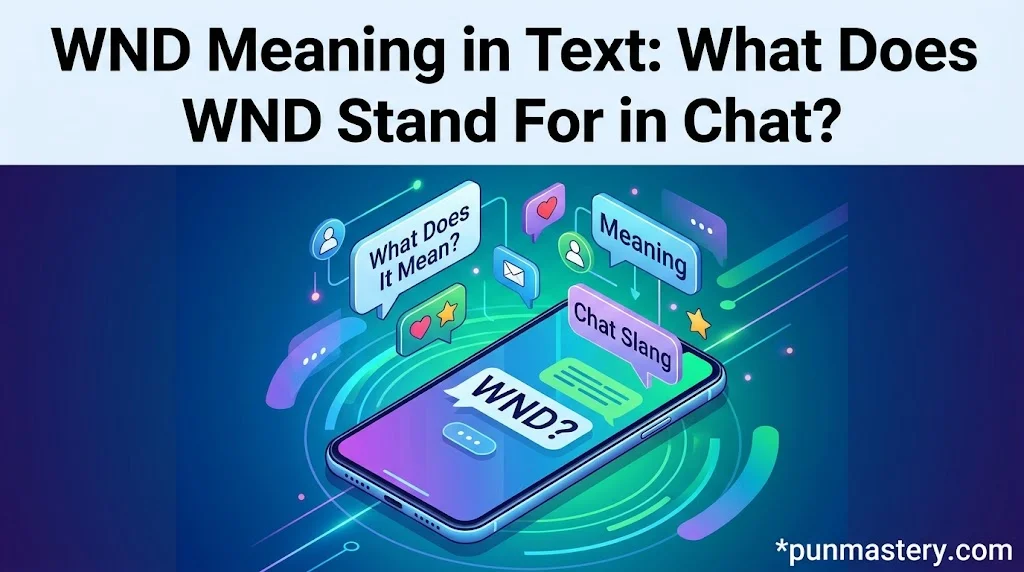
Have you received a text message containing WND and wondered what those three letters mean? Online abbreviations can be confusing, especially when someone uses a short form that you rarely see in everyday conversations. Unlike popular texting expressions such as LOL, BRB, and IDK, WND doesn’t have one universally recognized meaning.
The meaning of WND in text depends on the conversation, the sender, and the situation. Some people may use it as shorthand for weekend, while others may intend when, wind, or a phrase understood only within their friend group. These interpretations aren’t equally established, so it’s important to consider the surrounding message before deciding what someone means.
In this guide, you’ll discover the possible meanings of WND, how people might use it in text messages, and how to respond when you encounter it. You’ll also learn how WND differs from similar abbreviations, when it’s appropriate to use it, and why context matters more than the letters themselves.
Quick Answer: What Does WND Mean in Text?
WND doesn’t have one universally accepted meaning in texting. Depending on the context, someone might use it as an informal abbreviation for weekend, when, or another word or phrase. However, these interpretations aren’t standardized, so you shouldn’t automatically assume one definition is correct.
For example, if someone texts, “Any plans this WND?” they might mean, “Any plans this weekend?” In a different conversation, WND could represent personal shorthand or a typo.
The easiest way to understand WND is to read the complete message. If its meaning remains unclear, ask the sender what they intended.
What Does WND Stand For?
WND is a three-letter abbreviation whose meaning can vary between conversations. Unlike established texting shortcuts such as IDK (I don’t know) and BTW (by the way), WND doesn’t have one dominant meaning that everyone recognizes.
Here are some possible interpretations:
| Possible Meaning | Context | Example |
| Weekend | Casual plans and social activities | “Any plans this WND?” |
| When | Questions about time | “WND are you coming?” |
| Wind | Weather-related discussions or notes | “Strong wnd today.” |
| Personal shorthand | Private conversations or specific communities | A friend uses WND for a phrase they’ve agreed upon. |
| Would Not Dare | A possible niche interpretation | “WND try that challenge!” |
These examples illustrate how the same letters can have different interpretations. They don’t mean that every definition is equally common or widely recognized.
The key takeaway: WND is context-dependent. Before interpreting it, consider the topic, the complete sentence, and the sender’s usual texting style.
WND Meaning in Different Texting Situations
The surrounding conversation often provides the strongest clue to what WND means. A discussion about upcoming plans suggests a different interpretation from a conversation about the weather.
Let’s look at several situations where you might encounter these letters.
WND in Casual Text Messages
In a casual conversation, someone might use WND as a personal abbreviation to shorten a word or phrase. If the discussion involves upcoming activities, weekend might be the intended meaning.
For example:
Friend: “Any plans for this WND?”
You: “Not yet! Maybe I’ll watch a movie.”
In this hypothetical exchange, the sender appears to be asking about weekend plans. However, WND isn’t a standard abbreviation for weekend, so you should treat that interpretation as a possibility rather than a universal rule.
If the sentence doesn’t make sense with “weekend,” consider other possibilities or ask for clarification.
WND When Talking About Time
Some informal references interpret WND as a shortened form of when. This interpretation may make sense when someone asks about a date, time, or upcoming event.
For example:
Friend: “WND are you coming over?”
You: “I’ll be there around 6 PM.”
Here, the intended question appears to be, “When are you coming over?”
However, most readers will recognize the complete word “when” more readily than WND. If someone uses this abbreviation, their personal texting habits may explain the choice.
When you’re unsure, read the message aloud with “when” substituted for WND. If the sentence makes sense, you’ve found a possible interpretation, although confirmation may still be necessary.
WND in Weather Conversations
WND may also appear as shorthand for wind, particularly in informal notes or specialized contexts.
For example:
- “Strong wnd expected today.”
- “Check the wnd speed before heading out.”
- “The wnd is picking up near the coast.”
In these examples, the surrounding words point toward weather rather than texting slang.
Still, WND isn’t the standard spelling of “wind” in ordinary English. In a regular text message, most people would simply write the complete word.
WND in Private Group Chats
Friends sometimes create their own abbreviations. These shortcuts can save time because everyone in the group already understands what they mean.
For example, a group of friends might use WND as shorthand for an inside joke, a recurring activity, or a phrase they’ve discussed previously.
Someone outside the group might struggle to understand the same message.
This is one reason you shouldn’t rely entirely on online slang lists. An abbreviation can make sense within a small community without having a widely accepted meaning across the internet.
WND in Work or Technical Messages
If you encounter WND in a workplace message, spreadsheet, technical document, or specialized online community, don’t assume it’s texting slang.
Three-letter abbreviations frequently serve as labels, codes, or shortened terms in professional settings. The correct interpretation depends on the organization or field using them.
For instance, a weather-related report might use WND as a field label for wind information. A workplace might use the same letters as an internal project abbreviation.
If the message relates to work, check the document’s terminology or ask the person who wrote it.
WND Meaning on WhatsApp
On WhatsApp, WND doesn’t have an official, universally recognized meaning. People may use it as personal shorthand, an abbreviation borrowed from a group chat, or an accidental misspelling.
The intended meaning depends on the message.
Consider these hypothetical examples:
Example 1: Weekend plans
Message: “Any plans this WND?”
Possible meaning: “Any plans this weekend?”
Example 2: Asking about a schedule
Message: “WND will you be free?”
Possible meaning: “When will you be free?”
Example 3: An unclear message
Message: “WND?”
Possible meaning: There’s not enough information to identify the intended meaning confidently.
WhatsApp conversations often include incomplete sentences, emojis, and personal shortcuts. These features can make a message harder to interpret when the abbreviation itself is unfamiliar.
If a friend sends you WND without enough context, you can simply reply, “What do you mean by WND?” There’s no need to guess.
WND Meaning on Instagram, Snapchat, and TikTok
The meaning of WND doesn’t automatically change when you move from one social media platform to another. WhatsApp, Instagram, Snapchat, and TikTok all allow people to communicate using abbreviations, but none gives WND one universal texting definition.
Here’s how to approach the abbreviation on different platforms.
WND on Instagram
You might encounter WND in a direct message, a comment, or a conversation about upcoming plans.
For example:
Message: “What are your plans this WND?”
The sender may mean, “What are your plans this weekend?”
However, you should consider the rest of the conversation rather than assuming WND always means weekend.
WND on Snapchat
Snapchat messages are often brief and conversational. People may shorten words or leave out information when they believe the other person will understand.
If someone sends “WND?” after discussing plans, they may be using personal shorthand. The message alone doesn’t establish a definite meaning.
You can look at the previous messages for clues or ask what the sender means.
WND on TikTok
On TikTok, you might see unfamiliar abbreviations in comments, captions, or direct messages.
A creator or commenter may use WND as a personal shortcut. However, seeing an abbreviation on TikTok doesn’t automatically make it established platform slang.
If WND appears in a comment about weather, plans, or another specific topic, that subject can help you interpret it.
Remember: The platform provides context, but the complete message usually provides better clues.
Examples of WND in Text Conversations
Examples can help you understand how an unfamiliar abbreviation might work in everyday messaging. The following conversations are hypothetical illustrations, not proof that WND has a standardized meaning.
Examples Where WND Might Mean Weekend
Example 1: Making plans
Alex: “Any plans this WND?”
Sam: “I’m visiting my cousins.”
Possible interpretation: Alex is asking about weekend plans.
Example 2: Arranging a meetup
Mia: “Let’s meet this WND.”
Jordan: “Saturday afternoon works for me.”
Possible interpretation: Mia is suggesting a meeting during the weekend.
Example 3: Discussing free time
Chris: “Can’t wait for the WND!”
Taylor: “Same! I need a break.”
Possible interpretation: Chris is referring to the weekend.
In these examples, the conversation suggests weekend activities. Still, writing “weekend” or using the more recognizable abbreviation “WKND” would generally make the message clearer.
Examples Where WND Might Mean When
Example 1: Asking about arrival
Alex: “WND are you getting here?”
Sam: “Probably around 7.”
Possible interpretation: Alex is asking when Sam will arrive.
Example 2: Discussing a call
Mia: “WND can we talk?”
Jordan: “I’m free after lunch.”
Possible interpretation: Mia wants to know when they can talk.
Example 3: Asking about an event
Chris: “WND does the movie start?”
Taylor: “At 8 PM.”
Possible interpretation: Chris is asking about the movie’s starting time.
In these examples, “when” fits the sentence. However, the complete word is clearer and more widely understood than WND.
Examples Where the Meaning Is Unclear
Sometimes, the available information isn’t enough to determine what the sender means.
Example 1
Friend: “WND”
Possible interpretation: Unknown without additional context.
Example 2
Friend: “Did you see WND?”
Possible interpretation: WND could be a name, abbreviation, typo, or reference understood by the participants.
Example 3
Friend: “That’s WND 😂”
Possible interpretation: The sender may be using personal shorthand, but the intended meaning isn’t clear.
These examples demonstrate an important point: not every abbreviation has a reliable definition that can be identified from the letters alone.
How to Respond When Someone Texts WND
If someone sends you WND, you don’t need to know every possible meaning of the abbreviation. A sensible response depends on how much context the conversation provides.
Here are some easy ways to handle it.
Ask for Clarification
If the message doesn’t make sense, ask a straightforward question.
You could say:
- “What does WND mean?”
- “Sorry, what do you mean by WND?”
- “Can you explain that abbreviation?”
- “Do you mean weekend?”
These responses work because they let the sender clarify their intention without making the conversation awkward.
Use the Conversation for Clues
Read the previous messages before replying.
If you’ve been discussing weekend activities, the sender might be referring to the weekend. If you’ve been talking about a schedule, they might be attempting to shorten “when.”
However, context provides clues rather than guaranteed answers.
Reply Naturally Once You Understand
After you understand the intended meaning, respond as you normally would.
For example:
Friend: “Any plans this WND?”
You: “I’m going hiking on Saturday.”
If the sender confirms that WND means weekend, there’s no need to discuss the abbreviation further.
Avoid Pretending to Understand
Guessing can lead to confusing replies, especially when the message involves plans, appointments, or important information.
If you’re uncertain, asking one quick question is better than responding to the wrong meaning.
Is WND a Common Texting Abbreviation?
WND isn’t as widely recognized as common texting abbreviations such as LOL, IDK, OMG, and BRB.
These established shortcuts have familiar meanings in everyday digital communication:
| Abbreviation | Meaning | Example |
| LOL | Laughing out loud | “That video was hilarious LOL.” |
| IDK | I don’t know | “IDK what time it starts.” |
| OMG | Oh my God | “OMG, that’s amazing!” |
| BRB | Be right back | “BRB, someone is calling me.” |
| BTW | By the way | “BTW, I sent you the picture.” |
| WYD | What are you doing? | “WYD tonight?” |
| WYA | Where are you? | “WYA? We’re waiting.” |
| WND | Context-dependent | Meaning depends on the conversation. |
The main difference is consistency. Most readers can recognize the first several abbreviations without much explanation. WND is less predictable.
That doesn’t mean nobody uses it. Someone may use WND regularly within a particular friend group or online community. It simply means you shouldn’t assume every reader will understand it.
If your goal is clear communication, familiar abbreviations are usually a safer choice.
WND vs. Similar Texting Abbreviations
WND can be confusing because it resembles other short forms. Understanding the differences helps you avoid interpreting one abbreviation as another.
WND vs. WKND
WKND is a recognizable informal shortening of “weekend.” It removes the vowels from the word while preserving its main consonants.
WND may also be used by some people to refer to the weekend, but that meaning isn’t standardized.
Examples:
- “Any plans this WKND?” means “Any plans this weekend?”
- “Any plans this WND?” may mean the same thing, depending on the sender.
When discussing weekend plans, WKND is generally the clearer choice between these two abbreviations.
WND vs. WYD
WYD commonly means “What are you doing?” in casual texting.
For example:
“Hey, WYD tonight?”
This asks what the other person is doing that evening.
WND doesn’t have the same established meaning. If someone uses it to mean “when,” the message concerns timing rather than activities.
WND vs. WYA
WYA commonly means “Where are you at?” or simply “Where are you?”
For example:
“WYA? We’re outside.”
The sender wants to know the other person’s location.
By contrast, WND may be intended to refer to time or another concept. The distinction matters because location, timing, and weekend plans are different questions.
WND vs. WBU
WBU means “What about you?”
For example:
“I’m staying home tonight. WBU?”
The sender is asking about your plans or situation.
WND doesn’t have an equally established, universal texting definition. Avoid treating these abbreviations as interchangeable.
Is WND Appropriate for Formal Communication?
In most situations, WND is better avoided in formal writing because its meaning isn’t clear to every reader.
You can use familiar abbreviations with friends when everyone understands them. However, professional communication usually benefits from complete words and direct sentences.
Consider these examples:
| Informal Message | Clearer Alternative |
| “Any plans this WND?” | “Do you have any plans this weekend?” |
| “WND are you available?” | “When are you available?” |
| “Check the wnd speed.” | “Check the wind speed.” |
The clearer alternatives make the intended meaning easier to understand.
Use complete words in emails, school assignments, business reports, applications, and official messages. This approach reduces confusion and makes your writing more professional.
Even in casual chats, choosing a recognizable abbreviation can help you avoid unnecessary misunderstandings.
Why Do People Use Unfamiliar Texting Abbreviations?
People shorten words in digital conversations for several reasons. Some want to type quickly, while others use abbreviations that their friends already understand.
Faster Typing
Short forms can reduce the amount of typing required. This is particularly useful in quick conversations where people exchange several short messages.
However, an abbreviation only saves time when the recipient understands it. An unfamiliar shortcut can create more confusion than convenience.
Personal Habits
Some people develop their own texting styles. They may remove vowels, shorten familiar words, or create abbreviations based on phrases they use frequently.
These habits can become familiar within a group without spreading widely beyond it.
Group Identity
Friends, gaming communities, and online groups sometimes use expressions that make sense primarily to their members.
Understanding these expressions can help people feel connected to the group. However, outsiders may need an explanation before they can follow the conversation.
Informal Digital Communication
Text messages often contain incomplete sentences, emojis, and casual spelling. People generally don’t follow the same conventions they use in formal writing.
Still, informal communication doesn’t mean every shortened form has an established meaning. WND illustrates why readers sometimes need additional context to understand a message.
FAQs
What does WND mean in text messages?
WND doesn’t have one universally accepted meaning in text messages. Some people may use it as shorthand for weekend or when, while others may intend wind or a personal abbreviation. The complete message is the best starting point for understanding it.
What does WND mean on WhatsApp?
On WhatsApp, WND has no single official texting meaning. Someone might use it as personal shorthand when discussing plans or asking about timing. If the surrounding conversation doesn’t make the meaning clear, ask the sender what they intended.
Does WND mean weekend?
WND may be used informally to mean weekend, but this isn’t a universally established definition. WKND is a more recognizable abbreviation for weekend. Consider the context before interpreting WND this way.
Can WND mean when?
Some informal references interpret WND as a shortened form of when. For example, “WND are you coming?” might mean “When are you coming?” However, this usage isn’t standardized, so the sender’s intended meaning may differ.
Is WND a popular slang term?
WND isn’t as widely recognized as abbreviations such as LOL, BRB, IDK, and WYD. It may appear in personal conversations or specific online communities, but its meaning can vary. Avoid assuming everyone uses it the same way.
Conclusion
The meaning of WND in text depends on the sender and the conversation. It may represent weekend, when, wind, or personal shorthand, but none of these interpretations should be treated as a universal definition of texting slang.
When you receive a message containing WND, read the surrounding conversation for clues. If the intended meaning remains unclear, ask the sender rather than guessing. For your own messages, use familiar abbreviations or complete words whenever clarity matters. The simplest rule is to consider context first. Once you understand how the sender uses WND, you’ll have a much easier time following the conversation and responding naturally.